

Vocabulary
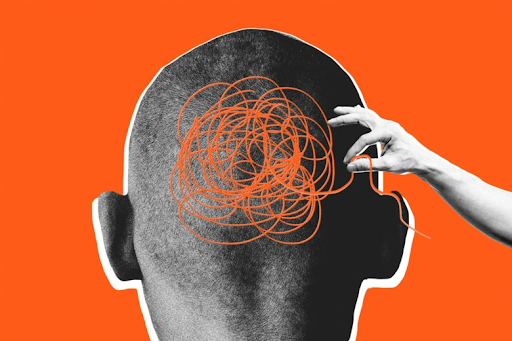
Word #1 –Mental Health
- Definition (simple language): Mental health describes how healthy your way of thinking is, leading to the way you act and the choices you make. Mental health is also what causes you to tell yourself certain things, whether they be positive or negative.
- Sentence (use the word correctly in a sentence): “In the new year, I want to improve upon my mental health by taking yoga classes and changing my mindset.”
- 3 Examples (3 examples in daily life/history): 1.) Having a growth mindset is great for your mental health and allows your brain to connect neurons and it opens up new ways to learn. 2.) A fixed mindset is bad for your mental health and leads you to believe that you do not have the ability to do something just because you aren’t in a healthy way of thinking. 3.) Having trouble with your mental health or doubting yourself to a certain extent because of the unhealthy mindset you are in can lead to mental illnesses, common ones being stress, anxiety, and depression.
- Visual (picture or drawing):
Word #2 Stress
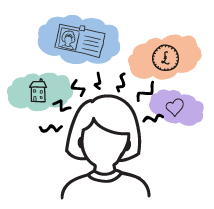
- Definition: Stress is a reaction to something that can cause one to feel nervous, overwhelmed, and scared. It often builds up inside of us and controls the choices we make and the way we treat others and ourselves.
- Sentence: “I have so much stress about the upcoming exam because I couldn’t find the time to study properly on top of all the other things going on.”
- 3 Examples: 1.) Stress can be on a large or small scale, and most everybody has probably experienced some level of stress during their lives. 2.) Stress negatively impacts mental health, causing a ripple effect on everything else we do. 3.) Stress can come as a result from school, work, or even the relationship you have with the people around you and the way they make you feel.
- Visual:
Word #3 Stigma
- Definition: A stigma is like a bias held against someone because of a specific detail about them, typically leaving that person to feel shameful or insecure.
- Sentence: “I’m nervous about the stigma of being descended from a family with a past of cancer.”
- 3 Examples: 1.) Stigmas can be stereotypes. 2.) Stigmas can be medical situations that have to do with a certain disease passed on through a family. 3.) Stigmas can be connected to the controversial qualities of a person like gender, race, culture, etc.
- Visual:

Word #4 Contamination Bias
- Definition: Contamination bias is when two groups in a trial are treated the way the opposite group would be used to, causing the difference between the two groups to become unclear.
- Sentence: “The contamination bias between the two groups caused confusion and disrupted the trial.”
- 3 Examples: 1.) Contamination bias messes with the results of a trial, causing big problems in the trial. 2.) People in the control arm of the trial are typically the ones to blame when contamination bias occurs. 3.) People controlling a trial want to prevent contamination bias, and when it does happen, they have methods that they can use to mitigate it.
- Visual:

Word #5 Fight or Flight response
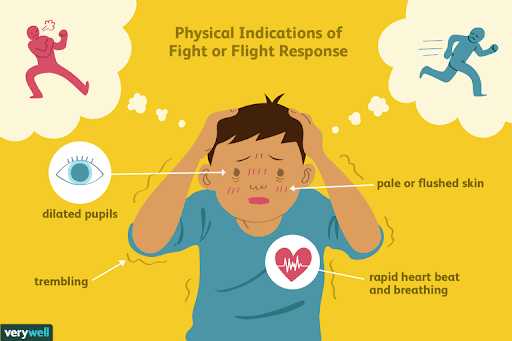
- Definition: Fight or flight response is an instinct in your head where you have to make a quick decision whether to become aggressive or to run from a threat.
- Sentence: “I quickly reverted to my fight or flight response when I heard a loud slam in the other room when I was home alone.”
- 3 Examples: 1.) A more rare option that people sometimes choose when it comes to fight or flight is freeze, where they just tense up and stay still. This most likely happens when their brain can’t choose between fight or flight quickly. 2.) There are different triggers to different responses. 3.) Each of the different responses have different symptoms that can be shown by your body.
- Visual:
Word #6 Self Improvement
- Definition: Self improvement is pretty self-explanatory: it’s a way of bettering yourself as a person by overcoming a negative trait.
- Sentence: “These yoga classes ar supposed to make its’ participants undergo lots of self improvement.”
- 3 Examples: 1.) Self improvement can also improve the people around you because they are affected by you. 2.) Self improvement is a choice that you make for yourself. 3.) Self improvement can be a physical or mental change for your health.
- Visual:

Topics (Mental Health)
- Mental illness in kids vs adults
- Mental illness transmitted through social media and the internet
- Biases and stereotypes
Questions (Mental Health)
- How do kids cope with mental illness as opposed to adults?
- What kind of effect does access to the internet and social media leave on the mental health of people of all ages?
- How does lack of information on mental illness affect mental health?
_________________________________________________________________________________
Focus Topic: Mental Illness Amongst The Generations
My inquiry question this week is “How does access to social media and the internet impact the mental health of people of all ages?” I am interested in learning more about this topic because I know that kids are treated much different from adults when it comes to mental health. Sometimes kids who say they have a mental illness are just seen as dramatic. Furthermore, I am curious about the impact access to the internet leaves on people’s mental health. It’s very, very interesting to me because lots of time, teens on social media experience peer pressure or insecurity, but the internet also has apps and websites that support mental health and are there for you to get better sleep. Finally, I think this is an important topic to research because many people may not have considered the different possibilities and impacts that certain, easily-accessible things can have on different communities.
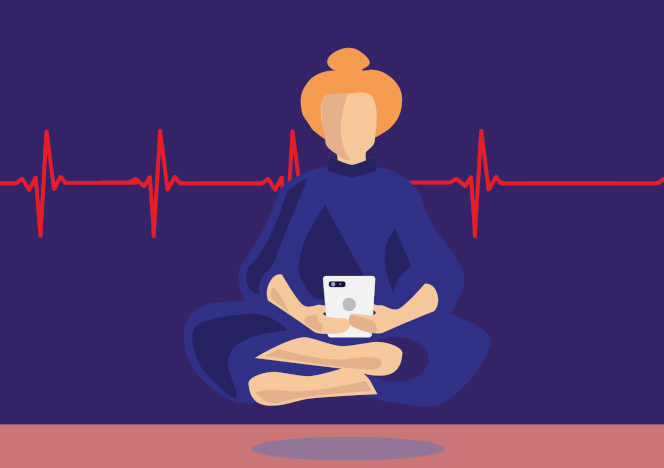
In order to learn more about the mental health of millennials, I read the article “Six Factors Contribution to the Mental Health Crisis in North American Higher Education“. In this article I discovered that access technology is one of the biggest differences between the millennial generation and any other. This was not very surprising to me because the more popular forms of technology today are pretty new and and aimed at millennials. Another useful article I found was “Four Ways Technology is Helping Mental Health“. This article had a different perspective because it discussed the positives that technology had on mental health. I found this source to be less credible because the final three reasons it gave were all pretty much the same, and they all emphasized on the use of mental health and stress and anxiety relief apps.
Works Cited:
 Technology Versus Mental Health